Detailed project information
Excavator and ADT Fleet Hire for South African projects
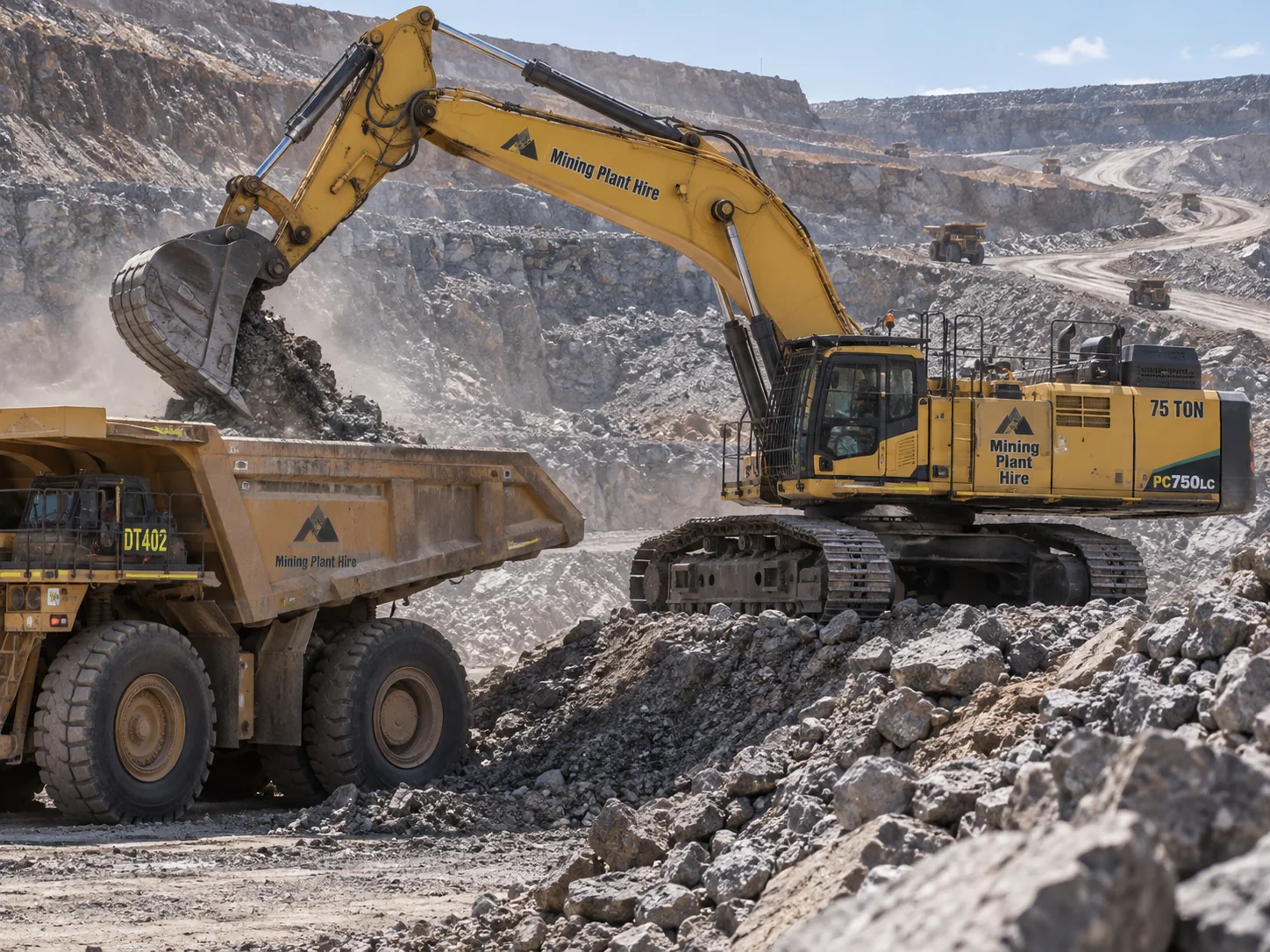
The loading unit, truck payload, number of trucks and haul-road conditions must work as one system. Fleet matching aims to reduce loader waiting time, truck queuing and avoidable fuel burn while maintaining the required tonnes per hour.
Typical applications
Indicative configuration
How to select the right solution
A project manager should confirm the following technical inputs before comparing availability or rates:
- Material density and swell factor
- Required tonnes per hour or bank cubic metres per day
- Excavator bucket size and practical pass match
- One-way haul distance, gradient and rolling resistance
- Cycle time, shift hours and planned availability
Site readiness and operating controls
- Loading-face width and floor condition
- ADT turning, tipping and passing areas
- Haul-road drainage, berms and grade
- Dust suppression and road maintenance plan
Related and matching equipment
- 20–50 ton excavators
- 20–45 ton ADTs
- Dozers, graders and water bowsers
- Service support and lowbed mobilisation
Mobilisation and transport planning
Each machine is transported according to confirmed operating mass and dimensions. A staged mobilisation plan may be needed where several units must arrive in production sequence.
Commercial information to define
- Fleet quantity and hire duration
- Wet or dry hire and shift pattern
- Fuel, operator and maintenance responsibility
- Mobilisation, establishment and standing-time rules
Quotations should state the hire basis, minimum hours, exclusions, operator requirements, fuel and maintenance responsibilities, transport, establishment, standing time and the process for recording downtime.
Production and operating factors
Fleet output depends on loader pass matching, haul distance, truck availability, road conditions, queueing and shift planning. Machine counts should be checked against the target production cycle.
Information to send in your enquiry
Frequently asked questions
What information is needed to quote Excavator and ADT Fleet Hire?
Provide the site location, work scope, material, quantities or production target, required start date, operating hours and expected duration. Machine weights and dimensions are also required for transport enquiries.
Is equipment availability guaranteed?
No. Availability, make, model, configuration and condition are confirmed in the written quotation after the project requirement has been assessed.
Can transport and mobilisation be included?
Yes, where required. Transport is priced from confirmed collection and delivery points, machine details, route conditions and permit requirements.
What should the site team confirm before mobilisation?
Confirm access, induction requirements, loading or offloading areas, ground conditions, shift arrangements, fuel responsibility and the authorised site contact.