Equipment overview
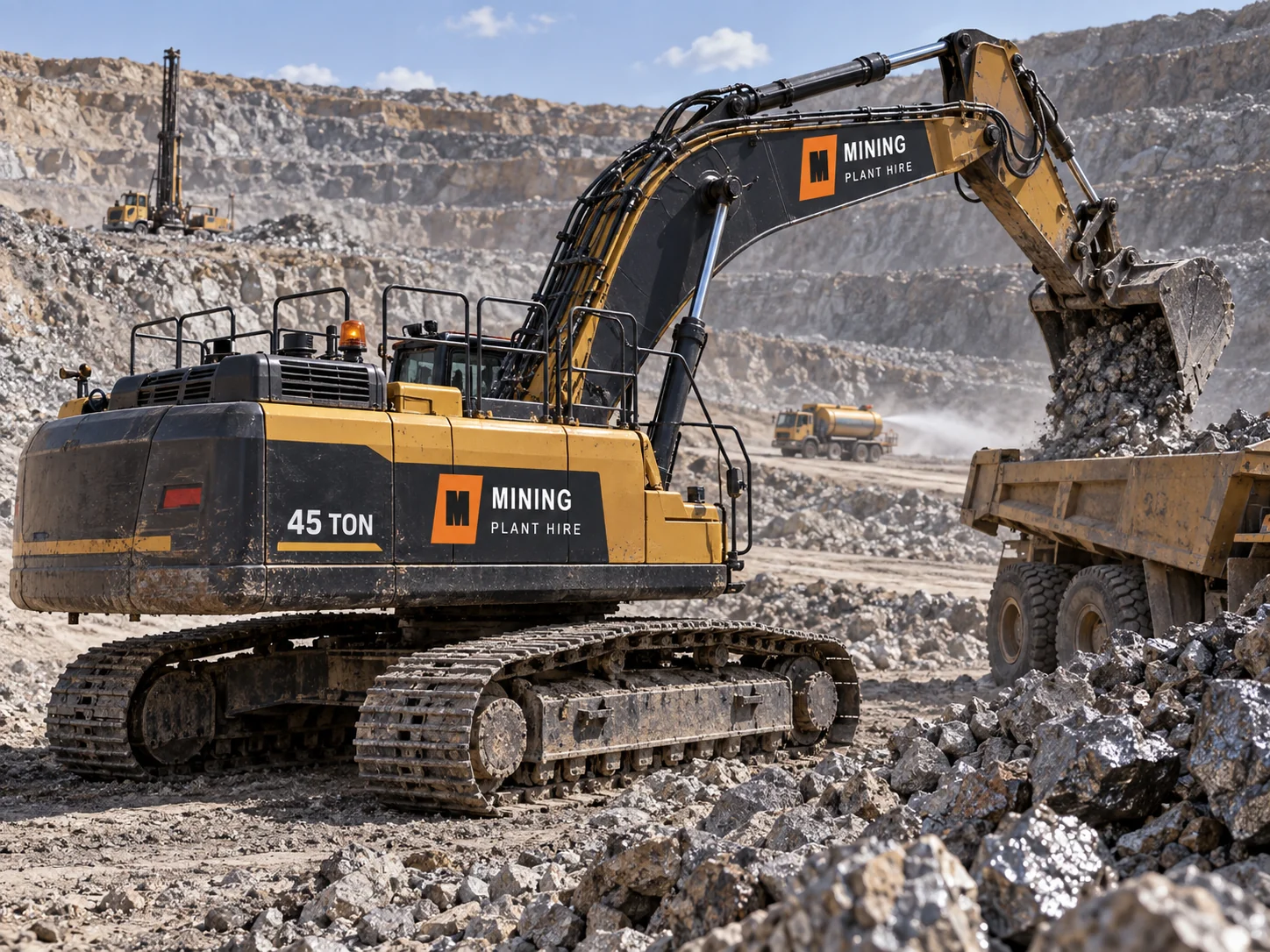
45-Ton Excavator for mining and project work
A tracked hydraulic excavator for digging, loading, trenching, rock handling and mine-development work. This size class can be considered for South African mine, quarry, civil and bulk-earthworks projects where its capacity and configuration suit the required duty.
Within the advertised mining excavator hire selection, the 45-Ton Excavator is a lower-to-mid range option. That position is only a navigation guide: the correct choice still depends on the exact make and model, material, duty cycle, site constraints and production requirement.
Excavator selection must balance digging duty, bucket payload, reach, bench geometry and the receiving truck fleet. A larger machine is not automatically more productive if access, material or truck matching constrains it.
Typical applications
Indicative specifications
How a project manager should select this machine
Confirm the following before comparing rates or reserving equipment:
- Material type, fragmentation, density and diggability
- Required production and preferred truck pass match
- Dig depth, reach, bench height and loading position
- Bucket type, capacity, wear package and other attachments
- Ground bearing conditions, working radius and access
Production and performance factors
Published machine capacity is only a starting point. Real output is influenced by:
- Average bucket payload and realistic fill factor
- Swing angle, digging depth and truck spotting time
- Cycle time, operator technique and face preparation
- Ground engagement tool wear and hydraulic condition
- Truck availability, queueing and shift utilisation
Brands and equivalent models
Comparable units may be sourced from Caterpillar, Komatsu, Volvo, Hitachi, Liebherr, Doosan/Develon, Hyundai and other established manufacturers. Mining Plant Hire remains brand-neutral: selection is based on the required class, configuration, condition, supportability and availability rather than one badge.
Recommended matching equipment
- ADTs or rigid dump trucks selected around production needs
- Dozers for ripping, clearing and rehabilitation
- Lowbeds selected from confirmed operating mass
Compare nearby size classes
Project teams often compare the closest capacity classes before finalising a request. Review the adjacent options, then confirm the exact model data and duty:
Site readiness, safety and operating controls
- Prepare a stable, level working platform with adequate bearing capacity
- Maintain safe bench faces, edge distances and exclusion zones
- Identify services and apply permit-to-dig controls where relevant
- Provide safe refuelling, maintenance and attachment-change areas
Mobilisation and site requirements
Transport depends on the exact make, model, operating mass, width and attachments. Larger units may require abnormal-load planning. Please provide the site location, access constraints, required start date and expected hire duration.
Commercial and quotation information
Pricing and availability depend on a clearly defined scope. The enquiry should address:
- Machine class, bucket and attachment requirements
- Operator, working hours, shifts and hire duration
- Fuel, GET, maintenance and breakdown responsibilities
- Production or hourly hire measurement
- Transport, assembly, permits and demobilisation
The written quotation should record minimum hours, exclusions, operator requirements, fuel and maintenance responsibilities, transport, standing time, downtime treatment and any project-specific establishment costs.
Information to send with your enquiry
Frequently asked questions
What is a 45-Ton Excavator used for?
45-Ton Excavator units are commonly selected for mine development and box cuts, loading adts or rigid dump trucks, overburden and bulk excavation. The final machine must be matched to the material, site and production target.
Which brands may be available?
Availability can include established mining and earthmoving manufacturers. We remain brand-neutral and confirm the make, model, age, configuration and condition offered for each enquiry.
Is transport included?
Transport is quoted separately unless the written quotation states otherwise. Collection, delivery, permits, escorts and site-access requirements are assessed for the specific machine and route.
Can it be hired with an operator?
Operator availability depends on the machine, supplier and project. Confirm whether you require wet hire, dry hire, shifts, working hours and the expected hire period.
How is the correct 45-Ton Excavator confirmed?
The final selection is checked against the duty, material, production target, site layout, ground conditions, attachments, matching fleet and exact manufacturer specifications.
What documents should be checked before mobilisation?
Confirm the offered machine schedule, inspection records, operator documentation, transport plan, site induction requirements, commercial scope and project-specific safety documentation.